

Former Central Bank of Nigeria (CBN) Deputy Governor Tunde Lemo has called for a new framework to ensure that host communities benefit directly from industrial expansion, proposing community stakes in businesses, priority employment for residents and stricter environmental standards.
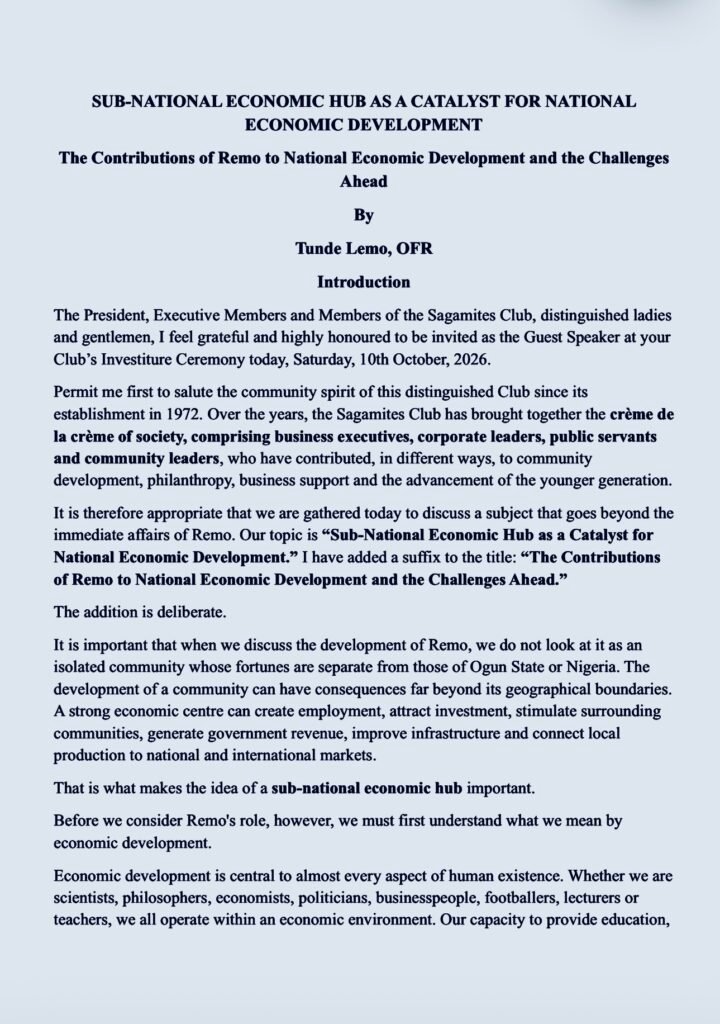
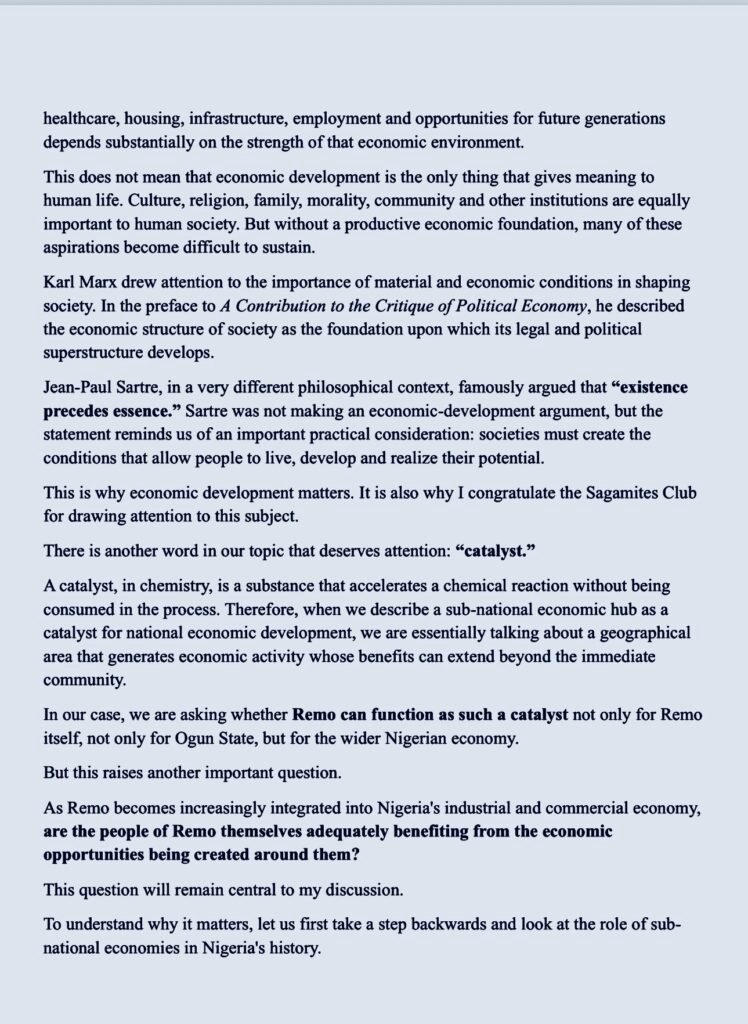
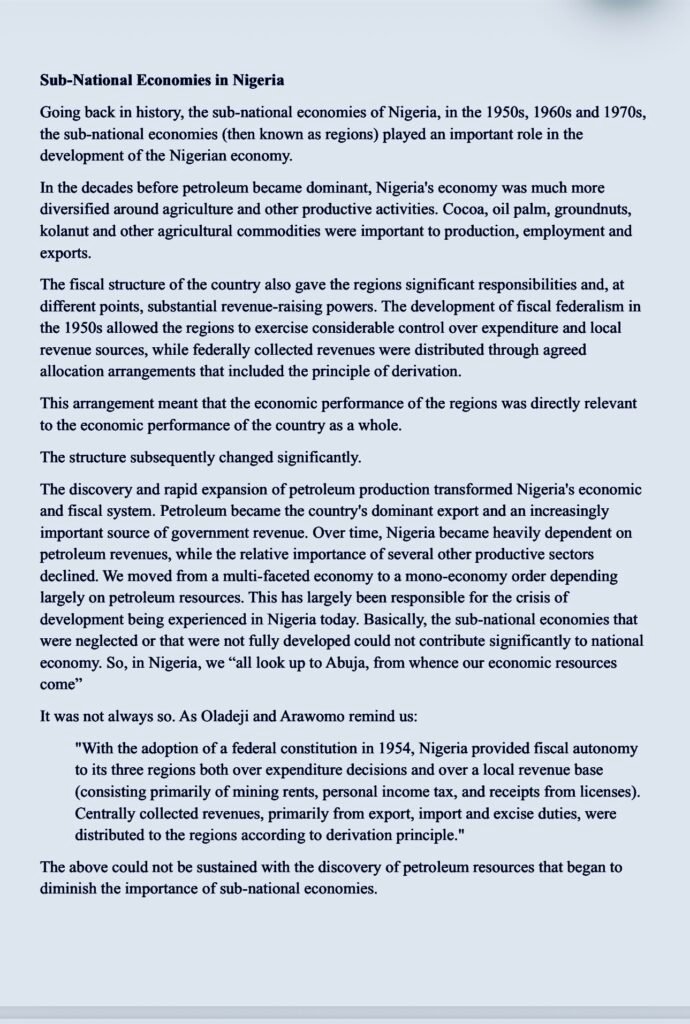
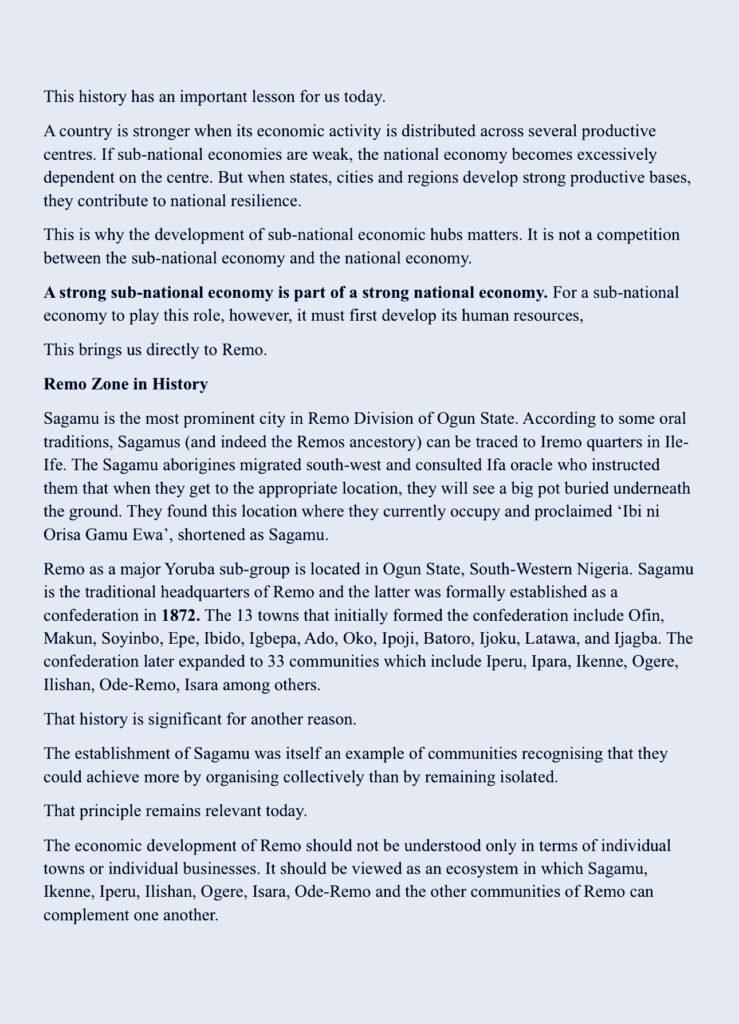
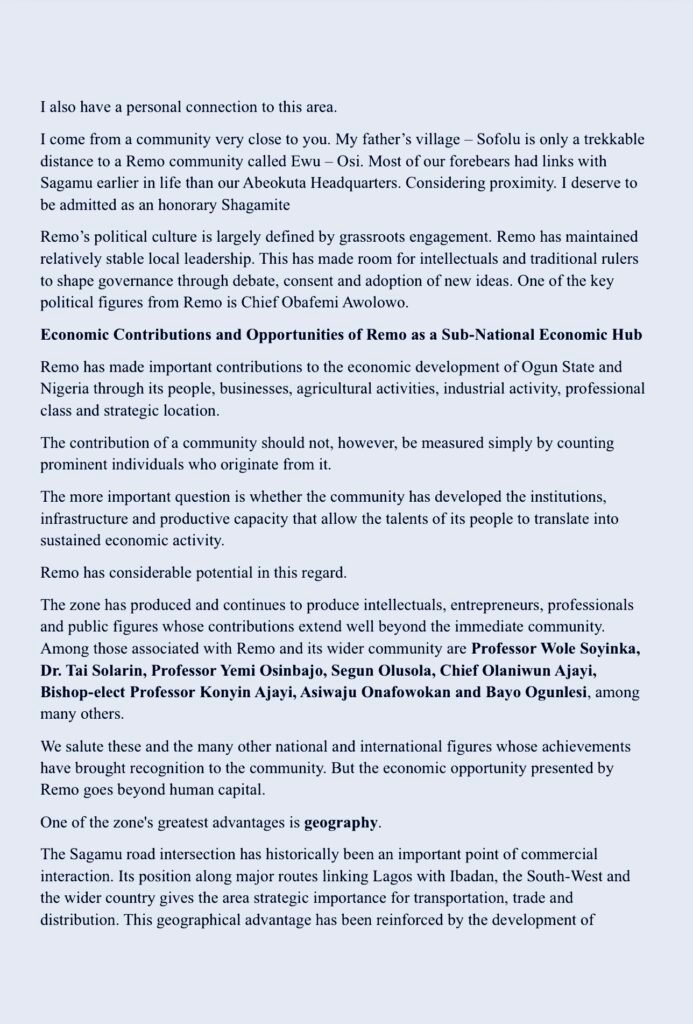
Lemo made the recommendations while delivering a paper titled “Sub-National Economic Hub as a Catalyst for National Economic Development: The Contributions of Remo to National Economic Development and the Challenges Ahead” at the Sagamites Club’s investiture ceremony in Sagamu, Ogun State, on Saturday, October 10, 2026.
He argued that although industrial development could generate jobs, investment and government revenue, communities hosting factories and other businesses must also enjoy lasting economic and social benefits.
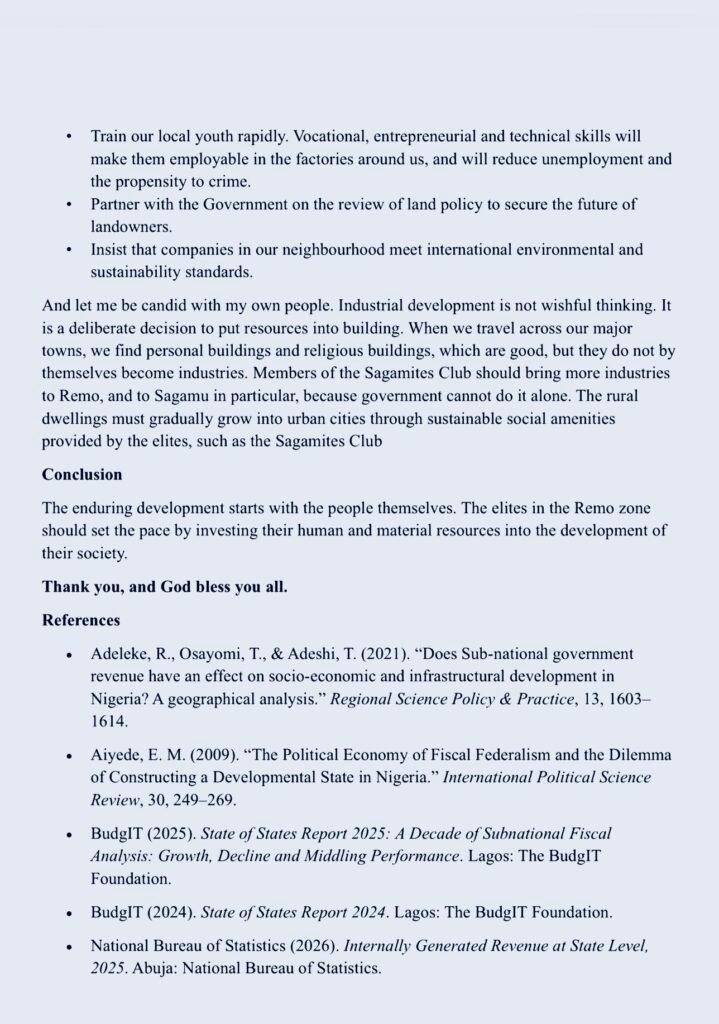
Under what he described as a “New Deal for host communities,” Lemo proposed four key commitments: securing landowners’ long-term interests in businesses established on their land; incorporating room for urban and community expansion into development master plans; prioritising qualified local residents for employment; and requiring companies to comply with international environmental, governance and sustainability standards.
On community participation in industrial investment, he recommended that landowners become stakeholders with interests in the future profits of businesses established on their land.
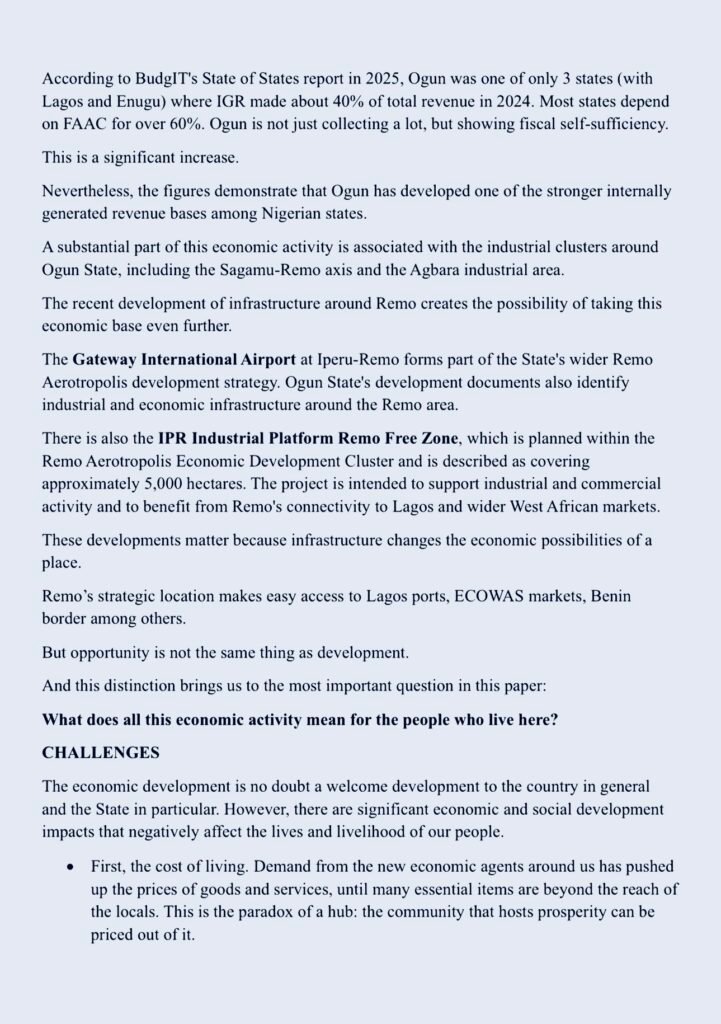
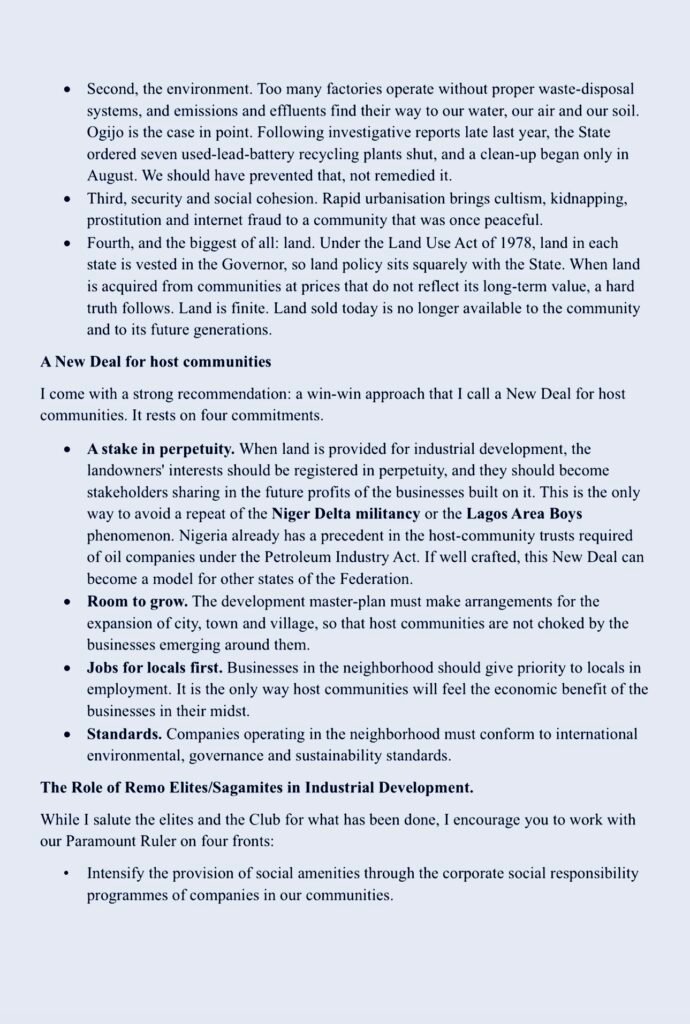
He cited host-community trusts under Nigeria’s Petroleum Industry Act as a precedent that could inform a framework for other states.
Lemo warned that communities risk being excluded from the prosperity generated around them when land is acquired without adequate consideration of its long-term value and residents have limited access to the jobs and commercial opportunities created by new investments.
“The community that hosts prosperity can be priced out of it,” he observed in the paper, highlighting rising living costs as one of the consequences of rapid industrialisation.
Lemo highlights environmental, security and land concerns:
The former CBN deputy governor identified rising living costs, environmental pollution, insecurity and land acquisition as major challenges accompanying economic expansion in Remo and its surrounding communities.
He cited the Ogijo industrial area as an example of the environmental risks associated with inadequate industrial waste management.
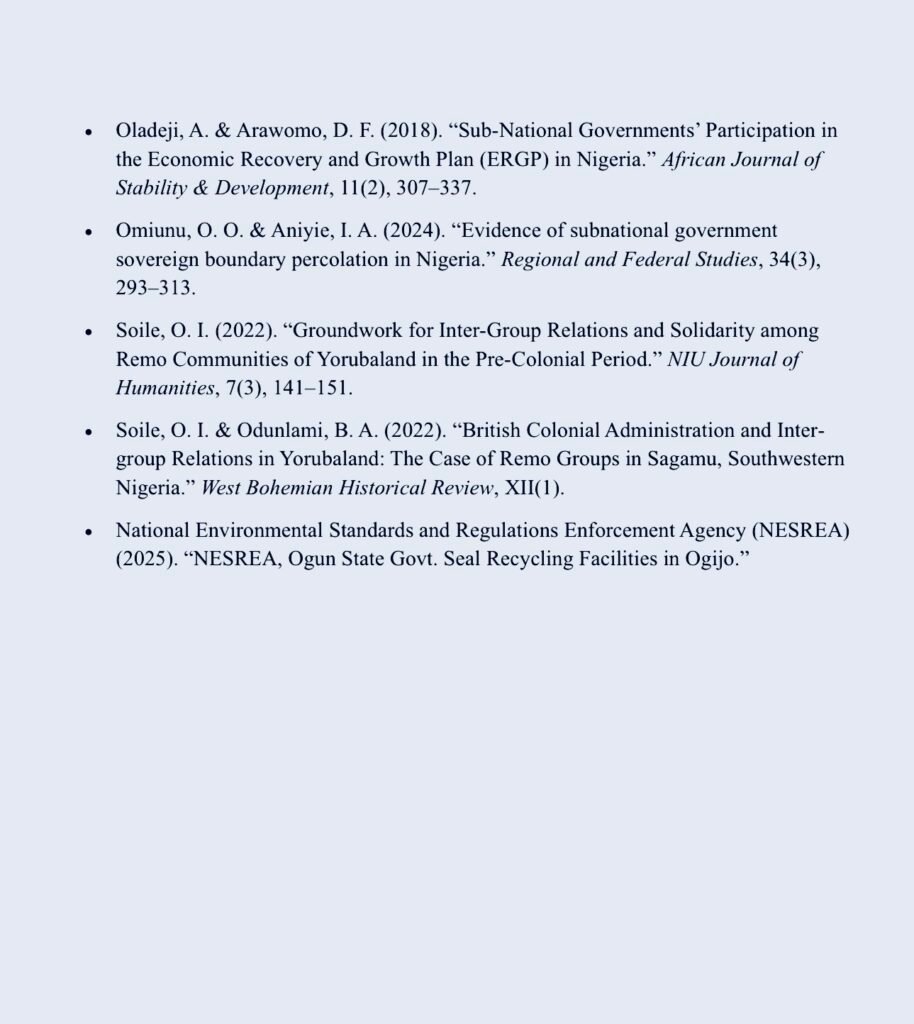
In November 2025, the National Environmental Standards and Regulations Enforcement Agency (NESREA), working with the Ogun State Government, sealed recycling facilities over non-compliance with environmental regulations governing used lead-acid batteries.
Lemo called for stronger compliance with environmental standards, arguing that industrial development should not compromise the health, livelihoods and long-term welfare of host communities.
He also warned that rapid urbanisation could place pressure on local infrastructure and social cohesion, while the sale of community land without adequate long-term planning could limit opportunities for future generations.
Remo’s strategic location offers economic opportunities:
Lemo said Remo’s location along major transport corridors connecting Lagos, Ibadan and other parts of the country provides significant opportunities for manufacturing, trade, logistics and distribution.
He identified the Sagamu–Lagos corridor, the Sagamu–Benin route, existing industrial activity and access to Lagos-based markets and ports as factors that could strengthen the zone’s role in Nigeria’s wider economy.
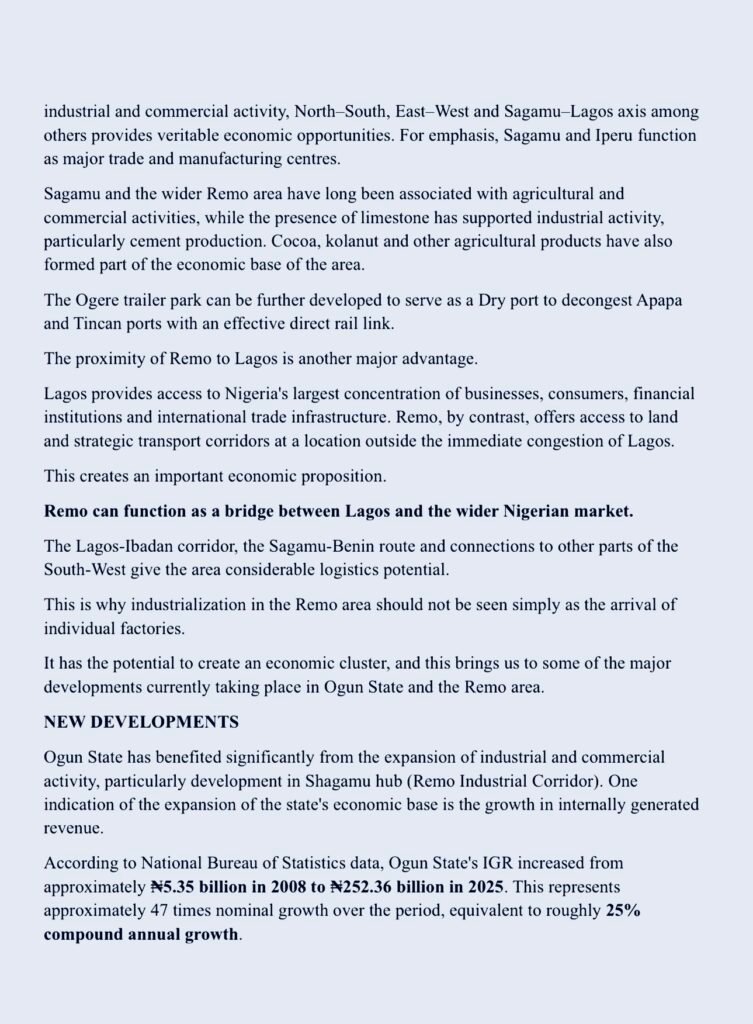
He also highlighted the Gateway International Airport at Iperu-Remo and the planned Industrial Platform Remo Free Zone as developments with potential to attract investment and expand industrial activity.
The free-zone project is being developed through a partnership involving the Ogun State Government and ARISE Integrated Industrial Platforms, with a focus on manufacturing, logistics and access to Nigerian and regional markets.
Lemo maintained that these opportunities would deliver broader development only if infrastructure and investment were accompanied by policies that improve the welfare of local residents.
According to National Bureau of Statistics figures, Ogun State generated ₦252.36 billion in internally generated revenue in 2025, compared with ₦194.93 billion in 2024.
The figures provide a measure of the state’s expanding revenue base, although they do not by themselves establish how much of that growth is attributable to Remo’s industrial corridor.
Calls on Remo elites to invest in industrial development:
Lemo urged members of the Sagamites Club and other Remo elites to support the zone’s development by investing in productive enterprises and attracting more industries, particularly to Sagamu.
He also called for stronger corporate social responsibility programmes to improve community amenities, alongside vocational, technical and entrepreneurial training to prepare young people for available jobs.
He stressed that government could not shoulder the entire responsibility for industrial development, urging private-sector leaders and community stakeholders to commit financial and human resources to sustainable local growth.
Lemo’s proposals centred on ensuring that Remo’s economic transformation creates opportunities for local residents while contributing to Ogun State’s fiscal capacity and Nigeria’s broader economic development.
The paper concluded that sustainable development must begin with the people themselves, with the region’s elites encouraged to invest their resources and expertise in the future of their communities.